The Cultural Thread · Arts @ Delicious at The Dunbar
The Piano Room
Riea Owens has spent a lifetime knowing that beauty is something you build, show, and insist upon. Central Avenue is about to find out.
By Omar Holguin · La Mancha Gallery
· April–May 2026
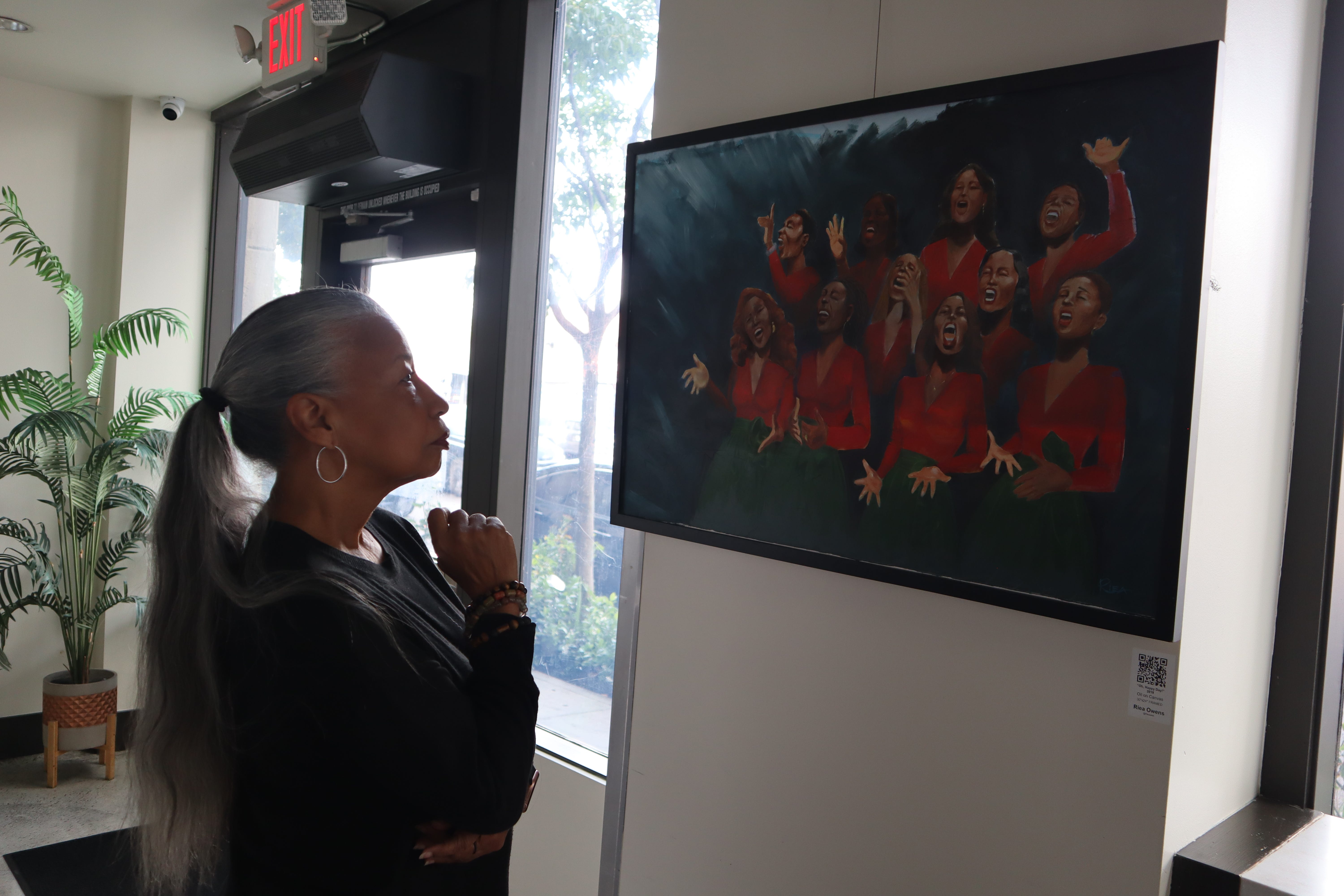
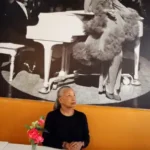
Before she was an award-winning artist. Before she was a Senior Art Director at The WB/CW and E! Television. Before the 2026 City of Los Angeles African American Heritage Month Calendar cover. Before any of it — Riea Owens was a seven-year-old in Pasadena dragging visitors into the piano room.
The piano room was where she kept her installation. Not that she called it that at the time. She had taken the World Book Encyclopedia’s section on costumes from around the world and turned it into something you could walk into and experience. She made doll clothes — her blonde Barbie got a kimono — and paper dolls and drawings. She built a display. She was, by her own description, obsessed.
“When anyone would visit, I would drag them into the piano room to view my display.”
That sentence tells you everything you need to know about Riea Owens. The compulsion to make something. The insistence that other people see it. The conviction, present at age seven, that the world’s cultures were worth this kind of attention.
Forty-plus years later, she is still dragging people in. The room is bigger now. On April 2026, it will be the Historic Dunbar Hotel.
From Dena to Central Avenue
Owens is a Pasadena native — Dena, as she calls it, meaning Pasadena and Altadena collectively. Her family migrated from Ohio to Los Angeles, then settled in Pasadena. Growing up, she says, fifty percent of her life was in LA. The corridor between the two cities wasn’t a boundary. It was a commute.
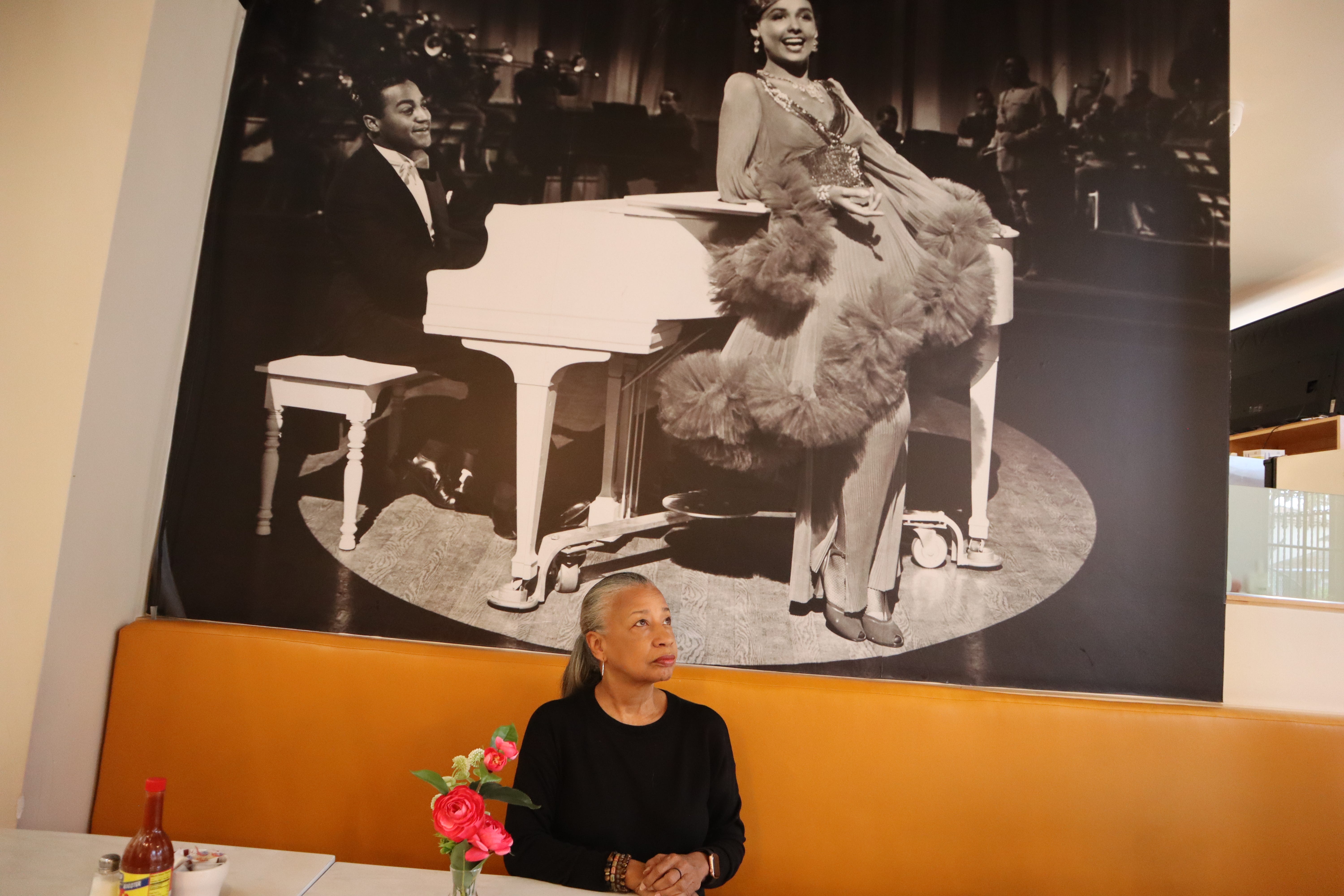
Her parents told stories about Central Avenue in the Forties. Old family photos are part of her personal archive. She describes herself as a lover of tradition, and the Dunbar — built in 1928 as the first luxury hotel west of the Mississippi to welcome Black guests — represents exactly that kind of tradition. The kind that required someone to fight for it. The kind that matters because of what it cost.
When Owens brings her work to the Dunbar this April as part of The Women of Central Avenue: Keepers of the Flame, she is not arriving as a stranger. She is arriving as someone whose family always had this address in their bones.
“My parents always reminisced about Central Ave. and told stories of L.A. in the Forties. Old family photos are images that are a part of my story. I am a lover of tradition, and The Dunbar represents just that.”
The hierarchy of a singular image
After Pasadena, there was a career that most artists would consider a full life on its own. Entry-level advertising at Sears. Graphic design at Paramount Pictures and studios beyond. Senior Art Director at The WB/CW Networks. Senior Art Director at E! Television Network.
Ask her what two decades in commercial visual culture taught her about art, and she answers in six words: “The hierarchy of a singular image.”
That is not an answer you get from someone who was just punching the clock. That is the answer of someone who spent years watching what happens when an image has to work — really work, against competing messages, executive approvals, brand guidelines, and deadline pressure — and came away understanding exactly what makes an image irreducible. What makes it the one thing in the room you cannot look away from.
But the approval process had a cost. Every design that went through it came back changed. By the time the work reached the public, it was no longer entirely hers. She kept doing it because she was excellent at it. But the thing that had started in the piano room — that compulsion to make something wholly her own and insist that other people stand in front of it — that was going quiet.
“The initial creation in advertising was always exciting, but by the time it went through the approval process, my designs were no longer mine. That’s why becoming a fine artist, where my creation is completely my vision, still moves me.”
She uses the word “moves” in the present tense. Not moved. Moves. Still happening. Ongoing.
The Havana Gents and the Society of Elegant People
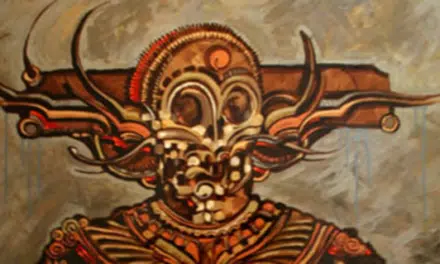
When Owens returned to painting, she returned to people. She almost exclusively paints the human form. The subject pool is, as she puts it, never-ending. People contain everything — history, aspiration, grief, joy, the full record of what it means to be alive in a body in a particular time and place.
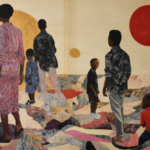
The specific direction of her return was a piece she calls Havana Gents. Dapper men. Intentional style. The painting was popular. She started researching further and found Les Sapeurs — La S.A.P.E., the Société des Ambianceurs et des Personnes Élégantes. The Society of Elegant People, originating in the Congo. Men in immaculate suits in circumstances that offer every reason to abandon elegance. Choosing it anyway. Choosing it as a declaration.
“I feel that in general women are featured more than men in paintings,” Owens says, “and I feel that there is a space to fill with men. Dapper men.”
There is a quiet sharpness to that observation. The fine art world, for all its celebration of the female form, has rarely treated Black male elegance as a subject worthy of sustained painterly attention. Owens identified the gap. She walked into it. The Les Sapeurs series is the result.
Fashion as resistance. Style as a declaration of dignity when the world is working to strip it away. The tradition runs from the Congo to the Harlem Renaissance to every Black man who ever put on a suit in a world that told him he didn’t belong in one. Owens paints it with the eye of a woman who has spent her life watching what images can do when they are allowed to do their full work.
The calendar, the rejection, and the resubmission
In 2026, Owens was selected as cover artist for the City of Los Angeles’ African American Heritage Month Calendar and Cultural Guide — a widely distributed civic publication aligned with a centennial celebration of organized Black history commemoration. The theme: A Century of Black History Commemorations.
The cover image comes from the Les Sapeurs series. It was unveiled at Los Angeles’ 76th Annual Citywide Black History Month Celebration at City Hall.
She was blown away. But here is the part of the story that does not make the official press release: she submitted the piece the year before. It was not selected. She thought about it. Then she submitted it again.
“I thought, ‘Why not submit it again?’ I am so glad that I did.”
That is not a small thing. The art world runs on rejections. Most artists know intellectually that rejection is not the final word. Very few have the specific combination of conviction and patience required to pick the same piece back up, look at it again, decide it is still worth the world’s attention, and send it back out. Owens did. The calendar cover is the proof.
The bridge
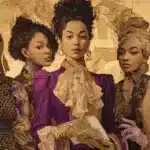
The Women of Central Avenue: Keepers of the Flame is structured as a living timeline — three generations of women whose work demonstrates that Central Avenue’s cultural fire has been passed from hand to hand without interruption. Elder. Bridge. Inheritors.
Riea Owens is a Bridge artist in this exhibition — and not just because the curatorial framing placed her there. Her biography earns it. She is the connective tissue between the commercial visual culture of the late twentieth century and the fine art practice she has built since. Between Pasadena and Central Avenue. Between her parents’ stories of the Forties and the artists coming up right now.
She has been showing her work at the Arts Pavilion at the Central Avenue Jazz Festival for three consecutive years. She did not arrive as a tourist. She arrived as a contributor, and she kept showing up. That is what the Bridge does. That is what a Keeper of the Flame looks like from the outside: someone who shows up, adds their heat, and makes the thing burn a little longer.
Ask her about her art tribe — the network of artists she has built over the last decade — and her answer becomes unexpectedly tender for someone who has otherwise kept her responses precise and unsentimental.
“I very much enjoy and rely upon my art tribe. Artists that I have met over the last ten years that I can call upon and that call upon me. The camaraderie is uplifting and encouraging. I can’t explain how important having an art tribe is.”
She does not frame it as mentorship. She frames it as mutual. Reciprocal. The kind of cultural stewardship that doesn’t require a title or an institutional role — just presence, consistency, and the willingness to show up for other people the way you want them to show up for you.
What she wants you to walk away with
If you stand in front of Riea Owens’ work at the Dunbar Hotel this April and walk away changed, she has a specific idea of what she wants to have shifted in you.
“An appreciation for art and the need to surround themselves with it.”
Not an education. Not a political awakening. Not even, necessarily, an understanding of the cultural history she is working within — though that history is present in every brushstroke. Just the hunger. The sense that you need to have art around you. That a life without it is missing something you cannot name until you are standing in front of a painting of a man in an immaculate suit in a building that has always been a safe haven for excellence the world wasn’t ready for.
The flame on these walls has always had a sound. This May and June, it will also have a face.
Riea Owens has been dragging people into the piano room her whole life. Come see what she built.
The Women of Central Avenue: Keepers of the Flame
April – May 2026 · Arts @ Delicious at The Dunbar
Historic Dunbar Hotel · 4229 S. Central Ave, Los Angeles, CA 90011
This story first appeared in The Cultural Thread
Read and subscribe on Substack →Omar Holguin is the Founder & Curator of La Mancha Gallery, established 2006 in Los Angeles. He produces the Arts @ Delicious at The Dunbar program and curates the Arts Pavilion at the Central Avenue Jazz Festival.